
Ohio Vineyard’s First Cabernet Franc Harvest Wins Double Gold


He was told to wait three years, but Michael Profeta's vines at Vincent William Wine made award-winning wine in 16 months.

On June 1, 2020, Michael Profeta planted 900-plus cabernet franc grapevines in front of Vincent William Wine, his upscale inn set on five lakeside acres in Madison, Ohio. Viticulture experts and vineyard owners in the Lake Erie American Viticulture Area — a 2.24-million-acre region bordering the lake’s entire southern shoreline — told the winemaking hobbyist that it would be three to five years before he would reap a true harvest. Grapes yielded before that time, they explained, should be culled so the vines and roots could develop without the stress of producing fruit.
The wait didn’t faze him.
“It was more for ambiance,” says Profeta, an engineer who owns a Cleveland-area MRI procurement, installation, and repair company.
But in October 2021, the one-acre vineyard produced enough grapes to yield 375 gallons of Vincent William Wine Estate Cabernet Franc, which Profeta made in the inn’s cellar. That initial vintage took a bronze medal at the 2024 Ohio Wine Competition. The wine made with the 2022 harvest won double gold at the 2025 contest.
What happened in the inn’s front yard is rare in the Lake Erie AVA, even with a growing season that extends well into the fall thanks to slow-to-cool summer-warmed waters, according to Maria Smith, an assistant professor and grape extension specialist in The Ohio State University’s Department of Horticulture and Crop Science.It stunned Profeta’s friend and consultant, Matt Meineke, proprietor of M Cellars boutique winery in nearby Geneva. He’d never seen anything like it in 18 years growing the likes of cabernet franc, cabernet sauvignon and merlot grapes on his and wife Tara’s 28 acres.
“Without somebody actually putting eyes on it, they would say we were crazy,” he says of the story they tell.
The detail-oriented Profeta always thought home winemakers who started with grape juice rather than fresh grapes were cheating the process. So when he decided to install a vineyard, he wanted to do it right. He attended a February 2019 Ohio Grape Industries Committee conference and spent the next months carefully following the site-preparation advice Smith offered there. He sent soil samples to a lab for testing, tilled that soil and added the results-indicated amendments, installed a drainage system.
“Any time I saw puddles from rain, I would go out with my tractor … and I would rake dirt into those low spots — and then watch the next rain,” he says.
After doing some research and consulting with Smith, he purchased cabernet franc vines — a cultivar that was hardier than pinot noir and didn’t require cabernet sauvignon’s longer growing season, yet would produce the desired red wine — from Double A Vineyards in Chautauqua County, New York.
“I wanted a pedigree grape — a vinifera, it’s called — not a hybrid,” he states. “That didn’t strike me as something interesting.”
Profeta planted the bare-root vines — dormant plants sold without soil around the roots — by hand, sheathing each in a plastic grow tube that acts like a mini-greenhouse, then built a trellis system. By October 2020, each plant had produced multiple 10-to-20-foot vines.
When Meineke and his vineyard manager visited, they shook their heads in disbelief. They’d planted the same cabernet franc vines at exactly the same time, approximately seven miles inland from Lake Erie, and were tending the expected growth, which Profeta likens to rosebushes. Meineke told Profeta he had enough growth to establish cordons — permanent or semipermanent extensions of vine trunks that act as a base for fruiting — the next year.
“Typically, a Year One plant would never have that,” Meineke says. “[The vineyard] was growing so well … it would be a waste to cut off all this growth. These plants were obviously strong.”
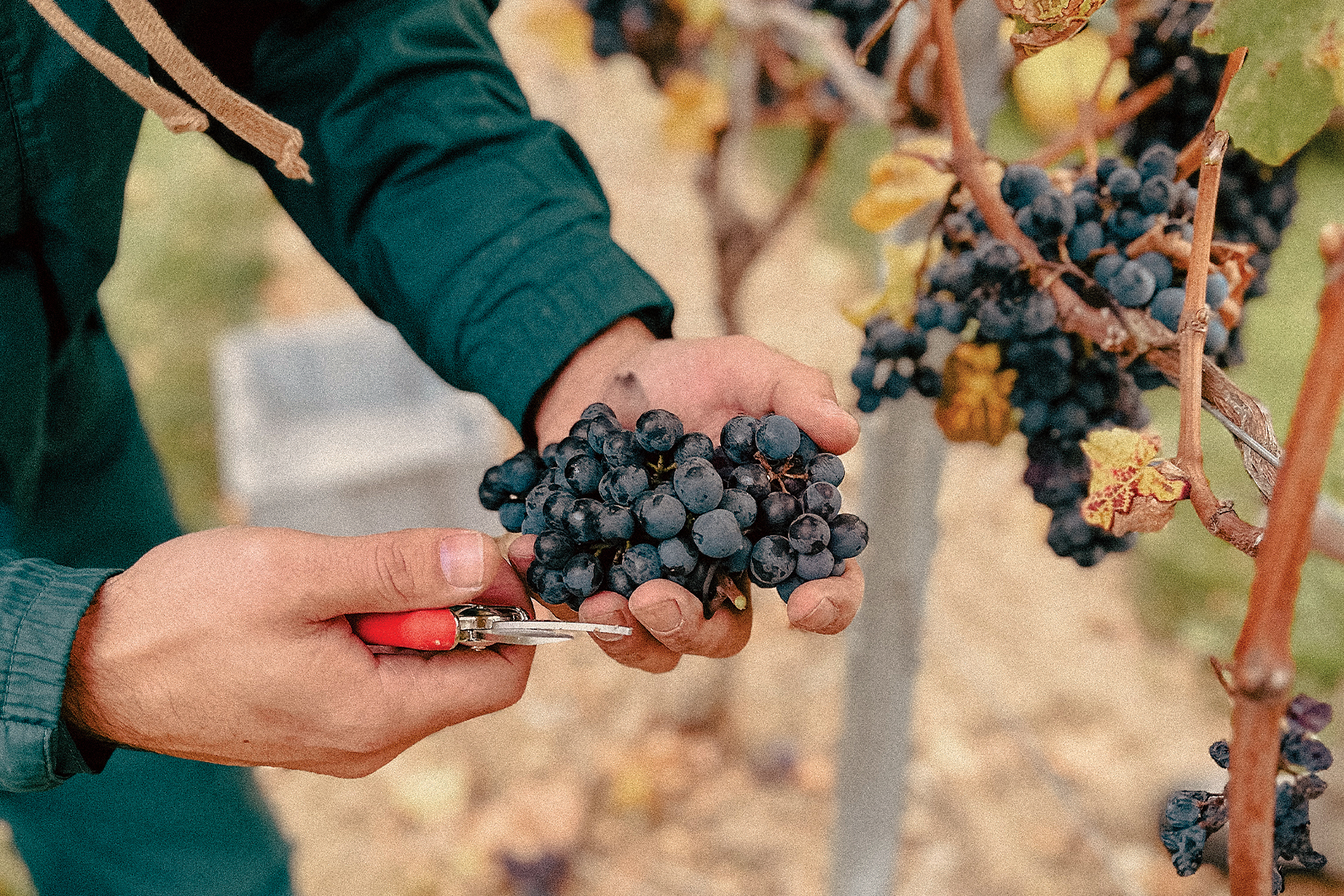
In early spring 2021 Profeta hired workers to prune and tie the vines to the trellises. As spring turned to summer, he tucked new shoots into the trellises and trimmed the growth with a hedger every week.
“I didn’t know I was going to become a farmer,” he says with amusement. “It was like ‘Green Acres,’” the 1960s sitcom in which a lawyer and his socialite wife move from New York City to a rural farm with no experience in working it.
Meineke pointed out the developing grapes to Profeta when he dropped by in June. During a subsequent phone call, Smith urged Profeta to cut off any fruit he saw to avoid taxing the plants. But Meineke repeatedly counseled a wait-and-see approach based on the healthy, balanced growth he saw during his three visits that season and Profeta’s phone-call reports. Smith concurred with Meineke after she visited Vincent William Wine with two OSU colleagues later that summer.
“What blew my mind was largely the rate of growth,” she says. It was what she’d expect to see in the sustained heat of Virginia, North Carolina, Georgia and Texas. “His vines were huge.” Robust enough, she adds, to hold a full crop.
Profeta didn’t exactly welcome the news. “I thought I had another couple of years before I had to worry about making wine!” he exclaims. He scrambled to buy equipment from a man who’d sold his winery and used French-oak barrels from a California broker. With little time to carefully plan a signature flavor profile or aging strategy, Profeta had to rely on pure instinct. “I ended up throwing a dart at a board for style,” he says.
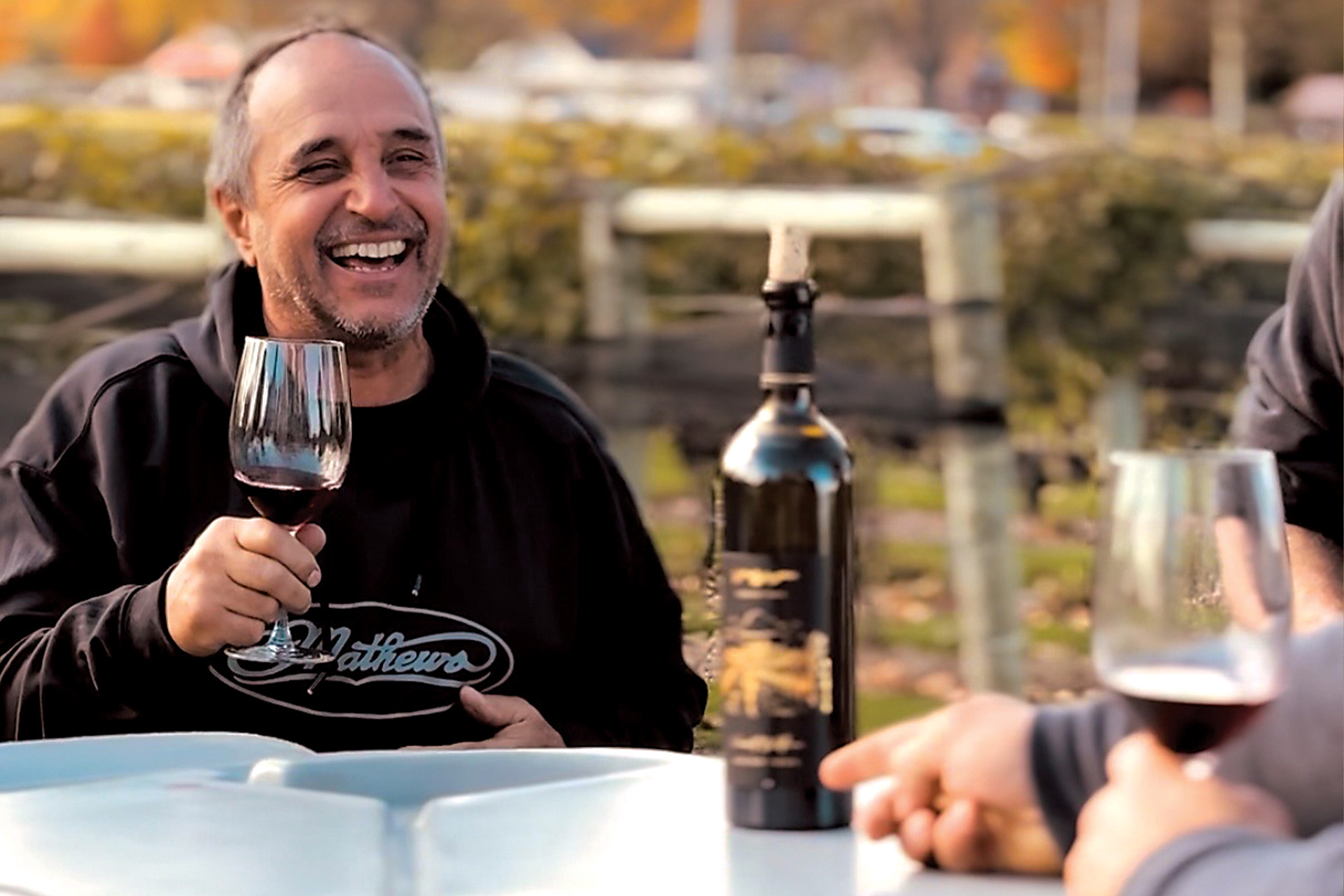
Smith attributes his success in part to luck in the form of a mild winter, lack of a spring frost, adequate growing seasons and rainfall, and absence of pests and disease. But she cites a quote often attributed to Louis Pasteur: “Luck favors the prepared.”
“I told Mike this time and time again: ‘Don’t diminish the amount of effort that you yourself put into making sure that those grapes were going to be successful in the first year,’” she says.
Profeta has his own theory: “I give credit to God.”
Stay on top of everything Lake Erie has to offer — all year long — by subscribing to our free The Splash newsletter. It’s your guide to the best food, drinks, parks, beaches, shopping, festivals, music and more.
Story:
Lynne Thompson
2026 September


