
Lake Erie in the 1800s


From Oliver Hazard Perry's naval victory to the rise of bustling port cities, find out how our Great Lake helped secure and forge a stronger nation during the 19th century.

March 1, 1803
Ohio becomes the 17th state.
June 18, 1812
The United States declares war on Great Britain, launching the War of 1812.
May 5, 1813
U.S. forces repel the first of two British sieges at Fort Meigs.
Don't Miss: Located on the Maumee River near Toledo, Ohio, Fort Meigs protected U.S. supply lines and blocked British forces, along with their Native American allies, from capturing Ohio.
September 10, 1813
The Battle of Lake Erie takes place near the Ohio island of Put-in-Bay. The U.S. Navy, led by Commodore Oliver Hazard Perry, defeats the British and secures Lake Erie.
Did You Know? The famous saying “Don’t Give Up the Ship” was Capt. James Lawrence’s dying command after his ship was attacked in the Atlantic Ocean. His friend, Commodore Oliver Hazard Perry, had the words sewn onto a battle flag, which he flew on the brig he christened the Lawrence to honor the dead captain. The Lawrence was disabled hours into the Battle of Lake Erie. As cannon fire splashed in the water around him, Perry — reportedly with the flag draped over his shoulder — rowed furiously to the U.S. Brig Niagara a half mile away. Within 15 minutes of climbing aboard the Niagara, American forces claimed victory over the British. The original battle flag is on display at the U.S. Naval Academy Museum in Annapolis, Maryland. Replica flags can be found flying on boats, stores and homes all along Lake Erie.
Don't Miss: Rising 352 feet above Lake Erie on Ohio’s South Bass Island, Perry’s Victory & International Peace Memorial honors Commodore Perry’s victory at the Battle of Lake Erie. The structure is the world’s largest Doric column consisting of 3,084 granite blocks and topped with an 8-foot bronze lantern. The memorial opened to the public on June 13, 1915, and became a national monument in 1936. The visitor center and grounds are open daily between May and October; however, due to construction, the memorial and observation deck will be closed to the public from March 2026 to November 2027.
Located in Erie, Pennsylvania, the Erie Maritime Museum displays artifacts related to the construction of Commodore Perry’s naval ships, which were built in the protected waters of Presque Isle. Items include shipbuilding tools, recovered timbers, uniforms, period weapons and an interactive ship’s deck. The museum’s signature attraction is the U.S. Brig Niagara, a seaworthy reconstructed replica of Perry’s relief flagship moored outside. Visitors can tour the Niagara when it’s in port and learn more about how its crew secured victory at the Battle of Lake Erie.
July 3, 1814
American forces cross the Niagara River and capture Fort Erie from the British.
Aug. 4-21, 1814
The British attempt to regain control of Fort Erie in one of the war’s last engagements. Both sides suffer high casualties, but the British abandon the assault.
Don't Miss: This August, The Hagen History Center in Erie will have a Perry-themed exhibit. Read more here.
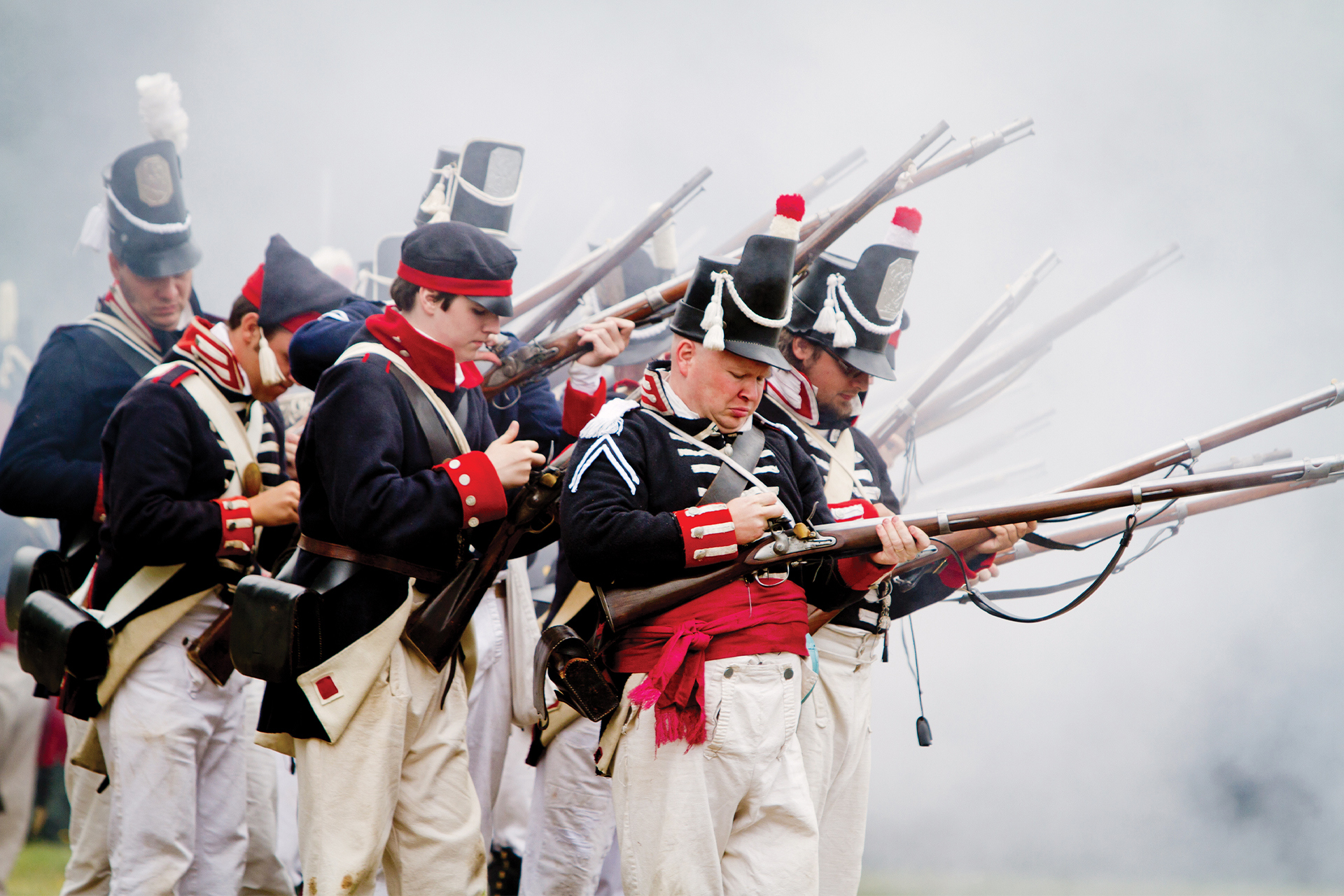
Mark the Calendar: Check out the Annual Siege of Old Fort Erie Reenactment, in Fort Erie, Ontario, Aug. 8-9 to experience what the fort was like during the War of 1812 as soldiers clashed and cannons were fired.
Oct. 26, 1825
The Erie Canal opens, linking the Great Lakes to the Atlantic Ocean and turning Buffalo into a boomtown.
Don't Miss: Buffalo’s premier waterfront destination, Canalside transformed the city’s forgotten Erie Canal terminus into a vibrant hub blending history and recreation. Visitors can kayak, paddleboat, ice skate, attend concerts, explore exhibits, join educational programs and relax along the water.
The full-size replica of the Erie Canal Boat Seneca Chief, which was the first to traverse the Erie Canal upon its opening in 1825, is docked at Canalside and open for public viewing from June to October.
1827
The first steamboat travels the Ohio & Erie Canal from Akron, Ohio, to arrive in Cleveland.

Don't Miss: Cuyahoga Valley National Park preserves the legacy of the Ohio & Erie Canal through restored locks, a multi-purpose towpath trail and interpretive sites. Visitors can explore historic villages, ride the scenic railroad, spot wildlife and experience how the canal shaped Ohio’s growth amid forests and rolling hills.
Oct. 31, 1836
The Ohio City War breaks out after a new bridge reroutes trade away from Ohio City. An angry mob from Ohio City attacks the bridge with tools and dynamite, leading to violent clashes with a Cleveland-led armed militia.
Don't Miss: The Bridge War Black IPA from Great Lakes Brewing Co. pays homage to this bitter rivalry. Pair it with a bite to eat at the brewery’s pub in Ohio City.
Feb. 11, 1847
Thomas Edison is born in Milan, Ohio.
Don't Miss: Since 1947, the Thomas Edison Birthplace Museum in Milan, Ohio, has celebrated the early life of Thomas Alva Edison, who spent his formative years in the bustling canal town. The museum allows visitors to learn more about Edison’s inventions — including the phonograph, electric light bulb and motion picture — and their impact on the world.
1820s-1860s
The Underground Railroad flourishes along Lake Erie, helping more than 100,000 enslaved people flee to Canada.
Did You Know?
Lake Erie cities were gateways to freedom for those escaping the slave trade. Detroit was code-named “Midnight” because it was the last major stop before crossing the Detroit River into Canada. Sandusky, Ohio, was known as “Hope.” Cleveland was “Station Hope.”
1861-1865
The Civil War divides the nation.
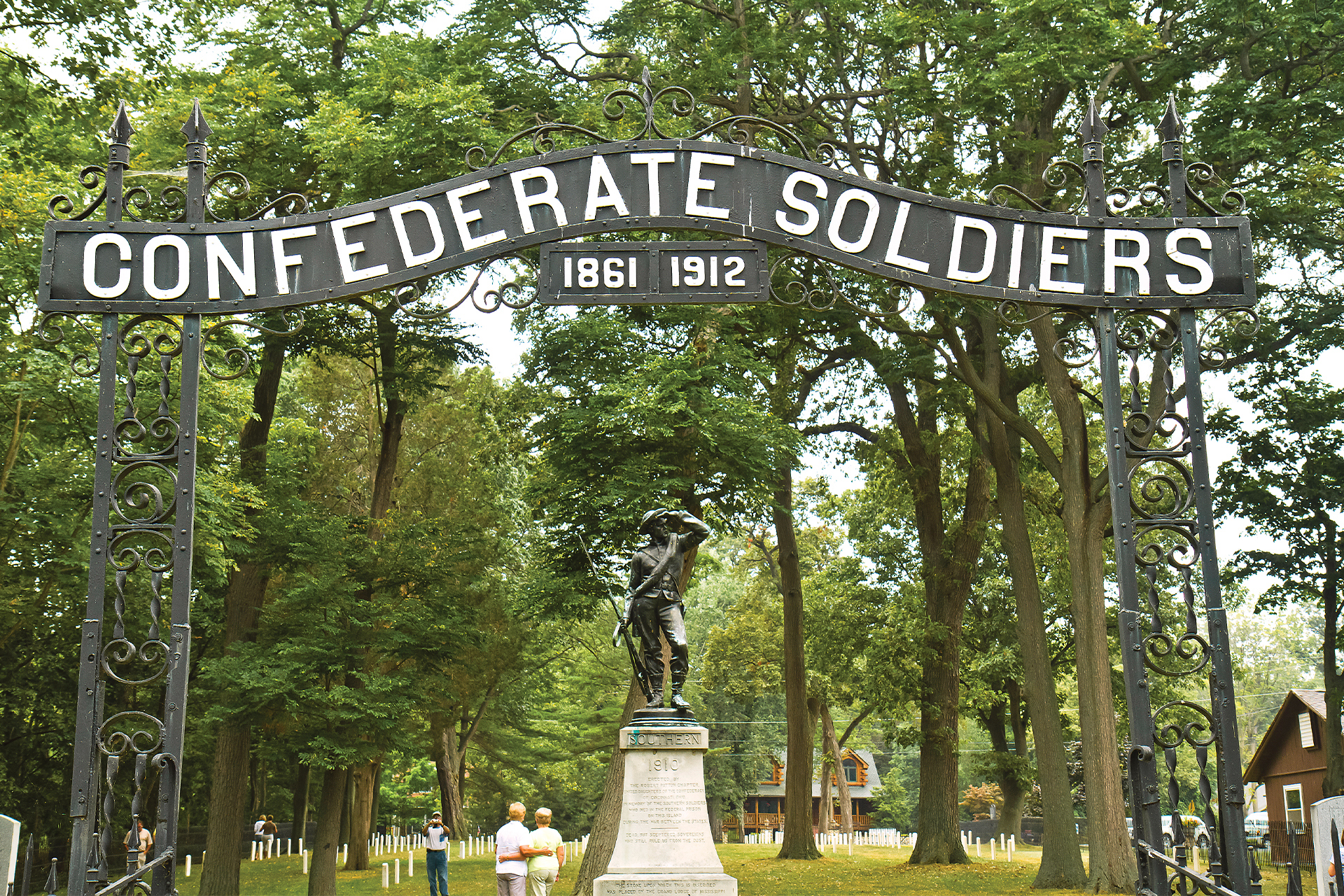
Don't Miss: Located just off the Marblehead peninsula in Ohio, Johnson’s Island becomes a prison camp for Confederate soldiers in April 1862. More than 9,000 officers and enlisted men were held here, including future governors and generals. Little remains of this National Historic Landmark other than the Confederate Stockade Cemetery, which holds the remains of 206 soldiers.
Dec. 6, 1865
Slavery is abolished with the ratification of the 13th Amendment to the U.S. Constitution.
1870
Cedar Point, the second-oldest amusement park in the U.S., opens in Sandusky, Ohio.
Aug. 14, 1874
The Chautauqua movement begins in New York as a summer training program — and is soon joined by Lakeside Chautauqua in Ohio.
April 29, 1879
Cleveland’s Public Square becomes the first public space to be fully illuminated by electricity when inventor Charles F. Brush installs 12 electric arc lamps.
June 4, 1896
Henry Ford drives his first “quadricycle” in Detroit, launching the automotive age.
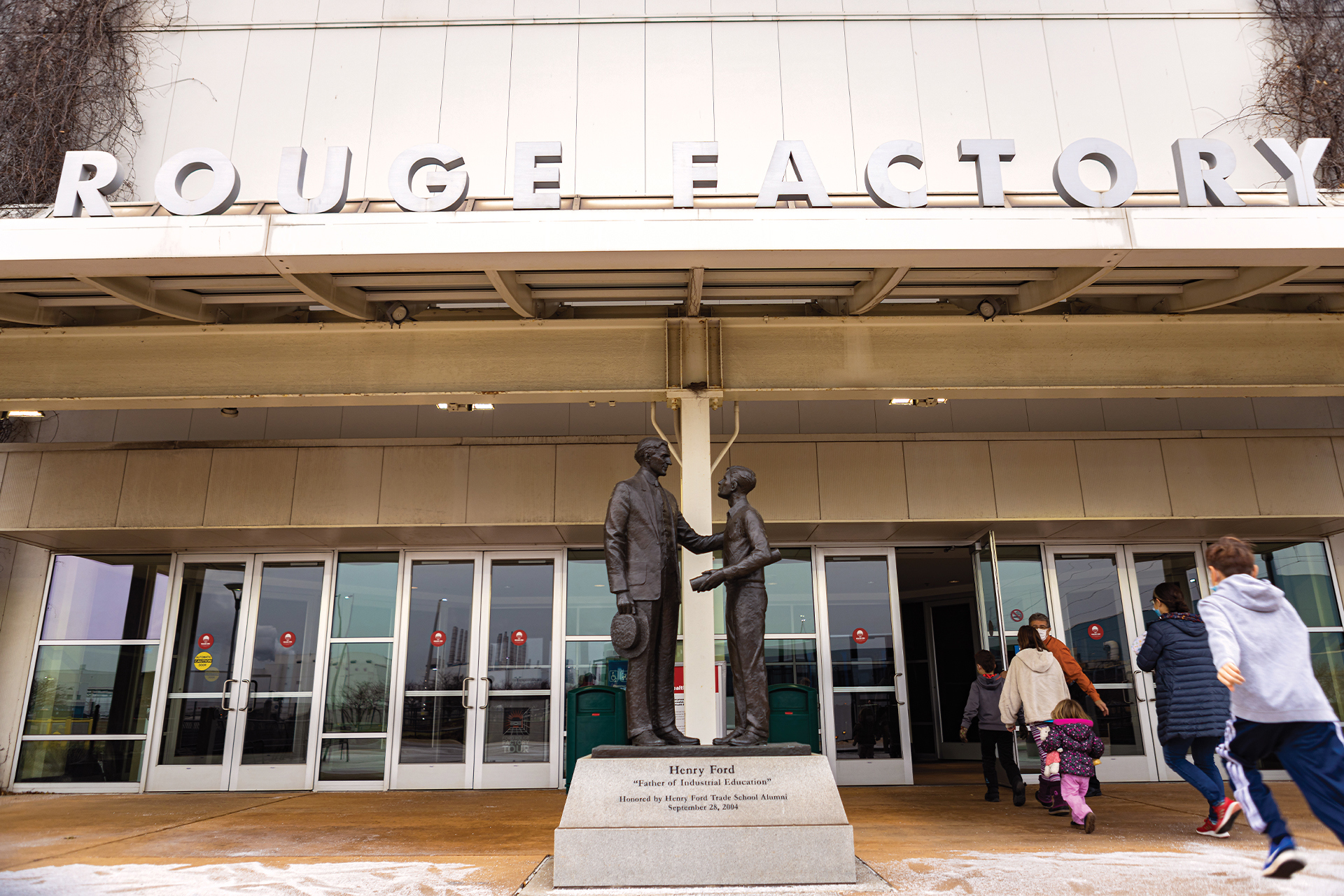
Don't Miss: In addition to housing Henry Ford’s original quadricycle, The Henry Ford complex in Dearborn, Michigan, is a repository for preserving important moments in American history. In 1914, Ford started collecting relics from his past, such as clocks and watches. He later acquired entire buildings, including Thomas Edison’s Menlo Park Laboratory, the Wright Brothers’ bicycle shop and Ford’s own childhood home, which are on display in the outdoor museum Greenfield Village. On June 9, 2026, the museum will debut the house of Dr. Sullivan and Richie Jean Sherrod Jackson, where civil rights leaders made historic plans for the Selma to Montgomery marches of 1965.
Nov. 15, 1896
Nikola Tesla’s alternating-current technology, achieves the first long-distance hydroelectric transmission in the U.S., sending power from Niagara Falls to Buffalo.
Don't Miss: The Niagara Power Vista in Lewiston, New York, brings science and history together through free exhibits, experiments, interactive gaming adventures and immersive theater.
How Lake Erie Shaped U.S. History

Step back in time for America's 250th anniversary to honor the people, places and historic moments that made Lake Erie essential to our nation's story.
Lake Erie in the 1700s

As America marks its 250th birthday, discover how 18th-century frontier expansion and colonial clashes along Lake Erie set the stage for a new nation.
Lake Erie in the 1900s

Step into the 20th century to see how the region transformed into a massive industrial powerhouse, fueling the American war effort and driving unmatched manufacturing might.
Lake Erie in the 2000s

Explore Lake Erie’s 21st-century journey through profound national tragedies, environmental awakenings, and a triumphant era of rust-belt revitalization along its historic waterfronts.


