
Lake Erie “Malibula” Beach House Turns Ohio Cottage Into a California-Inspired Escape


An Ashtabula, Ohio, lake house gets a quirky, California-inspired makeover with a tower, reclaimed materials and bold design.

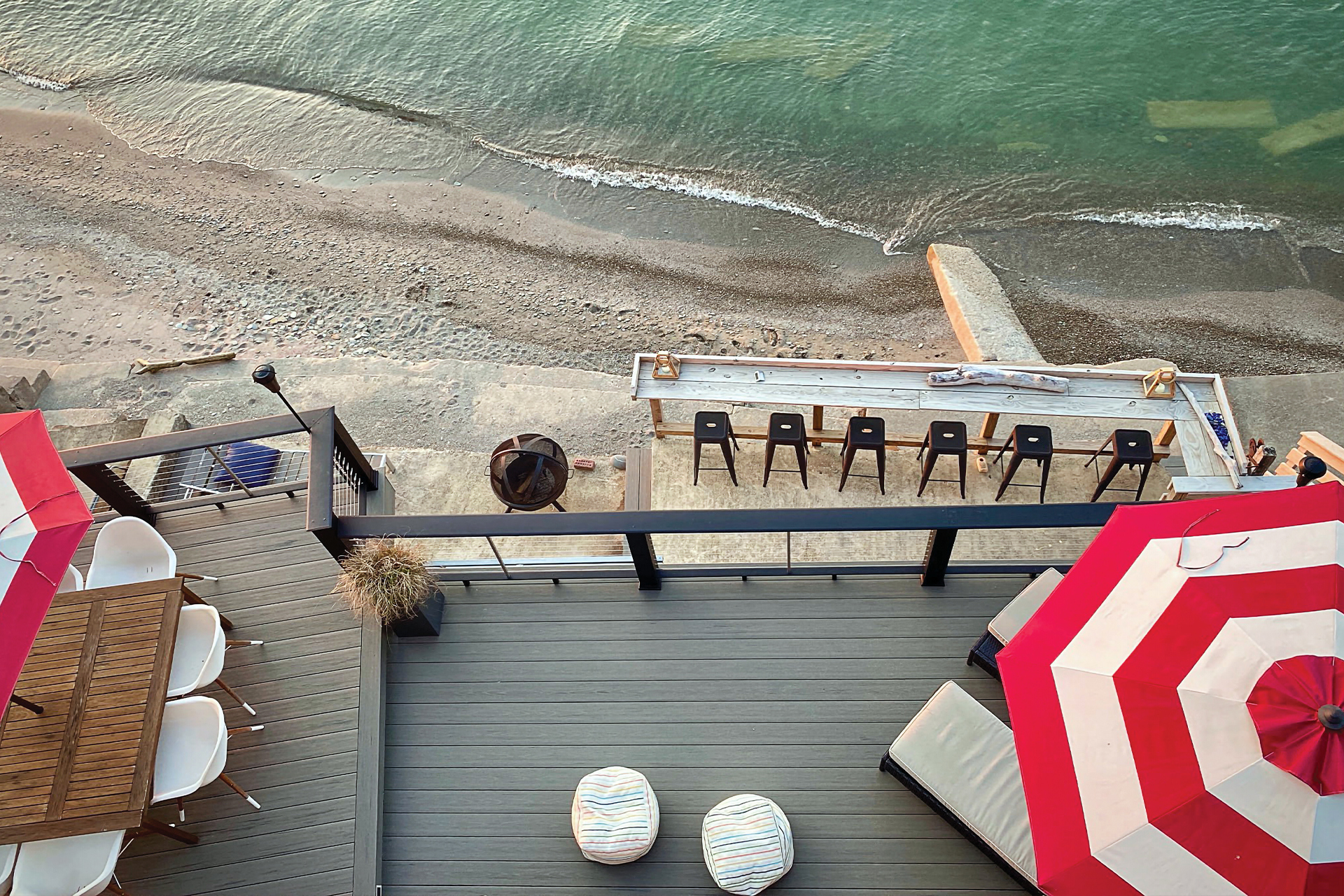
From the street, the house looks like any well-maintained century farmhouse, a simple two-story sided in slate blue and shingled in gray under the gables. But a mere glance at the back of the home from the 50-foot private beach reveals that it isn’t a typical Lake Erie retreat.
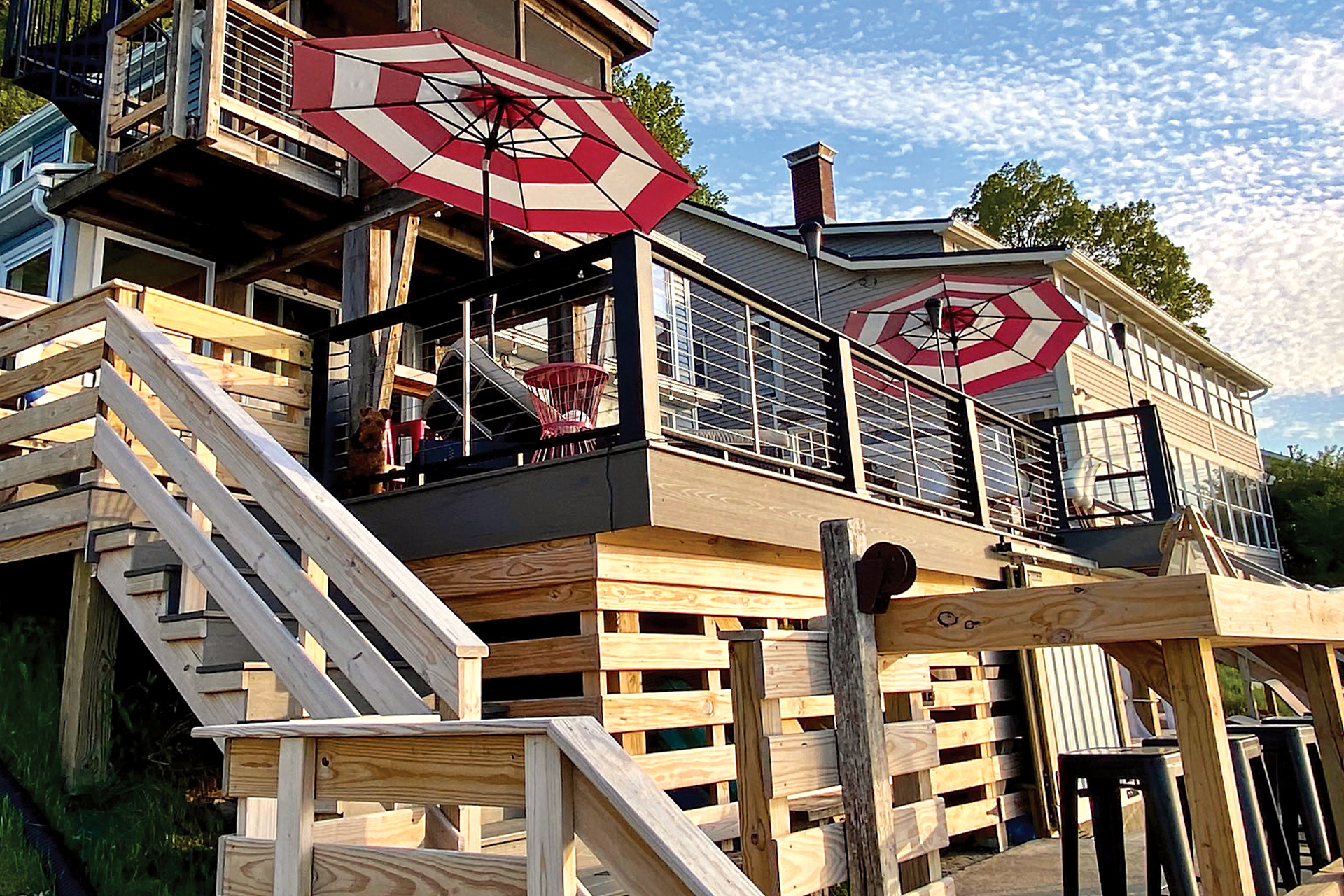
A rough-hewn 9-by-9-foot wooden tower rises from the ground-floor deck. It consists of seating at a reclaimed-wood bar on the first level, a screened-in porch on the second, and an observation platform only accessible via an exterior circular staircase on the third. Off the deck is a glass garage door that frames a view of illuminated letters, each a different color and style culled from a discarded strip-mall or store sign, hung over a tweedy red sectional on a dark-navy interior wall. They spell out “Malibula,” the name owners Michael Caito and John Rach gave their delightfully funky summer hideaway in Ashtabula County, Ohio.
“I’ve always wanted to live in California — in fact, I’m always California dreaming,” explains Caito, an architect at Chardon, Ohio-based Payne & Payne Builders. “I can’t afford to move out there. … [This] is the Malibu view at the Ashtabula County price.”
Ironically, the search for Malibula began on the opposite coast during a 2016 Cape Cod vacation. Caito remembers gazing at the water from the deck of the couple’s rented condo and thinking, Why can’t we have something like this near Cleveland? The couple ended up buying the first house Caito saw on Zillow, a three-bedroom, three-bath former fishing cottage that was basically move-in ready.
“We knew right away this was the one, as soon as we walked in,” says Rach, an accounting manager for Streetsboro, Ohio-based design-builder Geis Companies.
The couple’s first project was turning the entire second floor into a nautical-themed primary suite by knocking out walls between two bedrooms, a hallway and half-bath and removing the ceilings to open up the space to the attic. The original pine floors were stripped of their olive-green paint job and refinished. One remaining beadboard wall, along with the ceiling, was painted white, a foil for facing walls painted baby blue and red.
A sliding barn door in a fourth wall of whitewashed pine beadboard reclaimed from a bedroom opens to a luxurious bath. A glass wall separates the vanity and commode from a wet room tiled in a gray-and-white stripe featuring a shower and soaking tub.
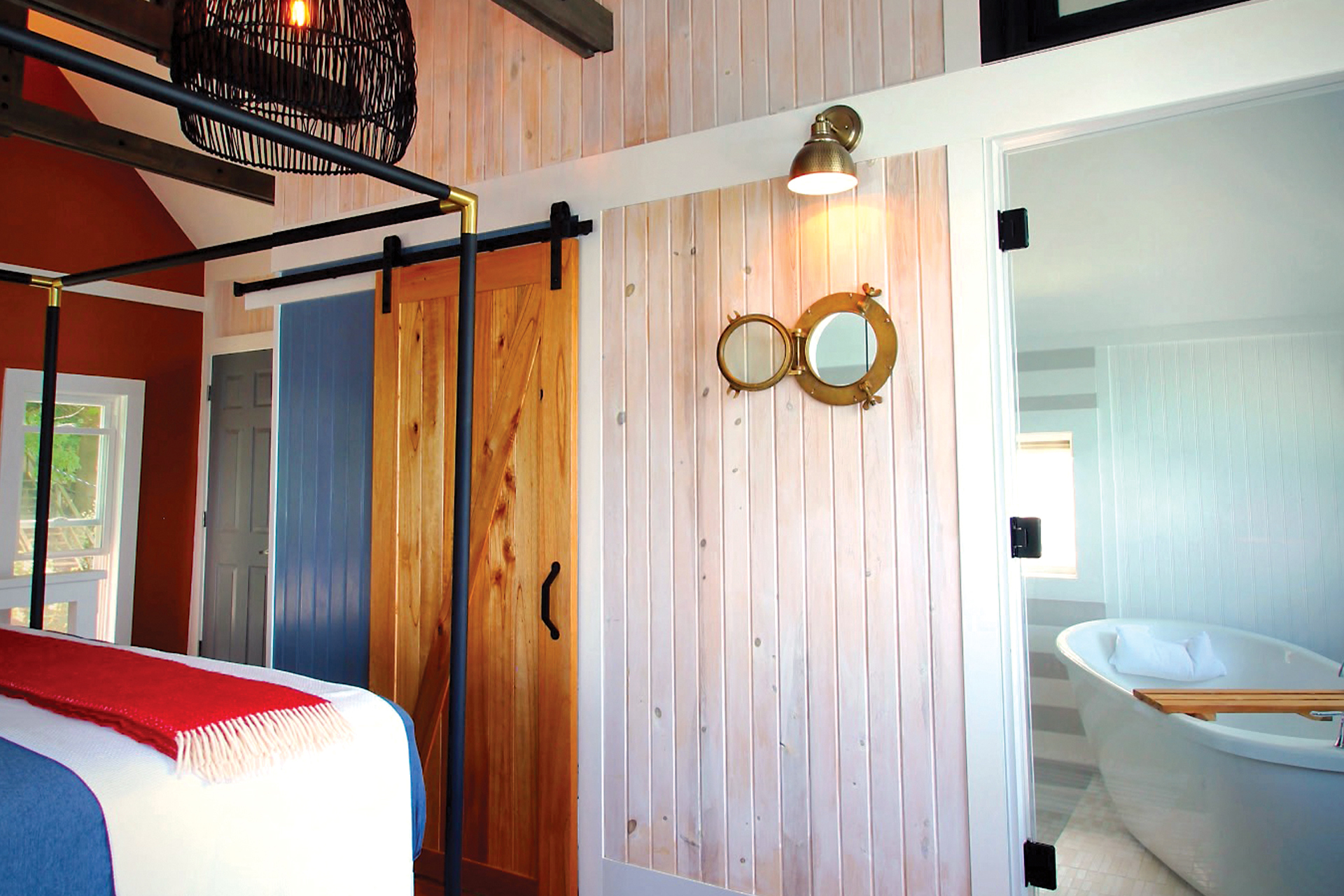
“We built the tub up on a step so we can see out the window,” Caito notes.
Erosion necessitated replacing the wooden deck in 2018. Steel pilings were driven 19 feet down to shale to support a larger composite replacement and shore up the back of the house. Permits were then pulled to construct the tower, which Payne & Payne carpenters built out of wood reclaimed from a razed Geneva-on-the-Lake, Ohio, water slide.
“We figured if we were going to go through all this effort, we might as well do something kind of cool,” Caito says.
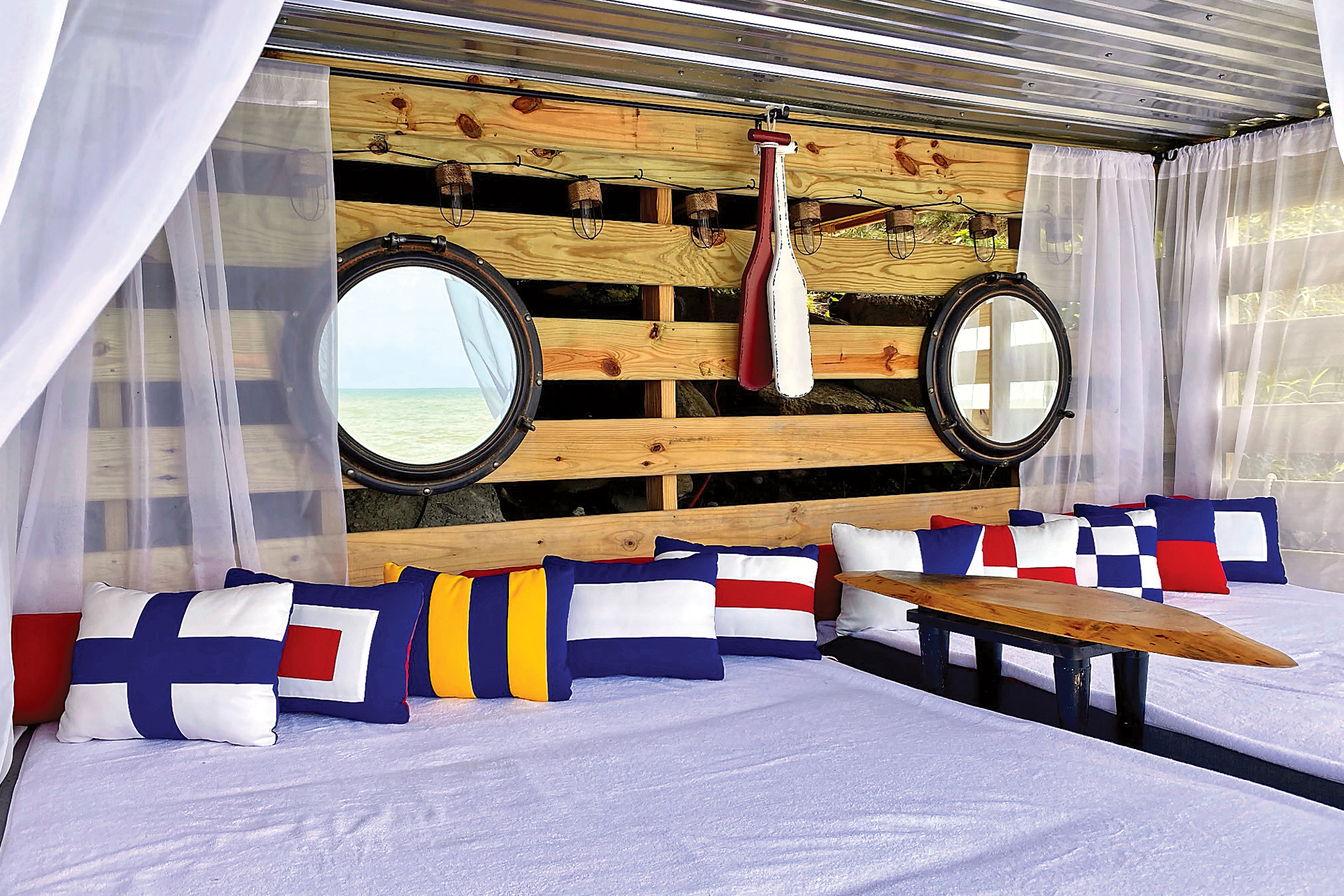
A portion of deck roofs a nautical-themed beachside cabana curtained in diaphanous white panels. The couple outfitted it with two custom-made mattresses elevated from the concrete by reclaimed composite decking and shielded from rainwater filtering through the deck slats by a shiny metal ceiling. Rach covered the mattresses with huge white Turkish towels and racing-flag-inspired pillows ordered from Etsy.
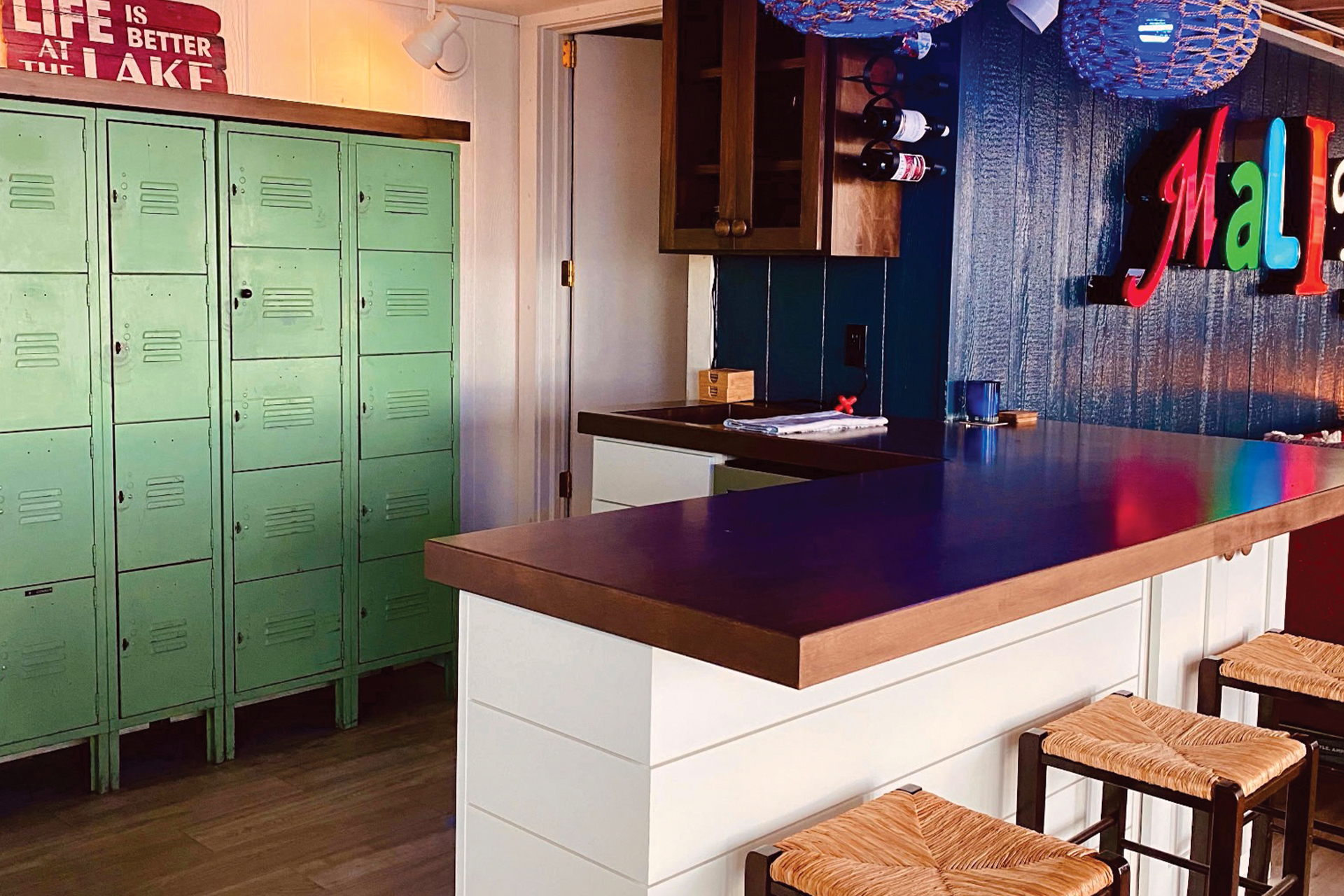
The couple subsequently replaced the rotting rec-room floor with a luxury-vinyl-tile counterpart; replaced two double-hung windows with the glass garage door to open the space to the lake in fair weather; and enlisted carpenters to add a shiplap-sided wet bar topped in solid maple. Caito and Rach found the “Malibula” letters online and at the now-defunct Cleveland Flea. Rach put LED tape inside each letter, then drilled holes in the wall to connect them to the electrical system.
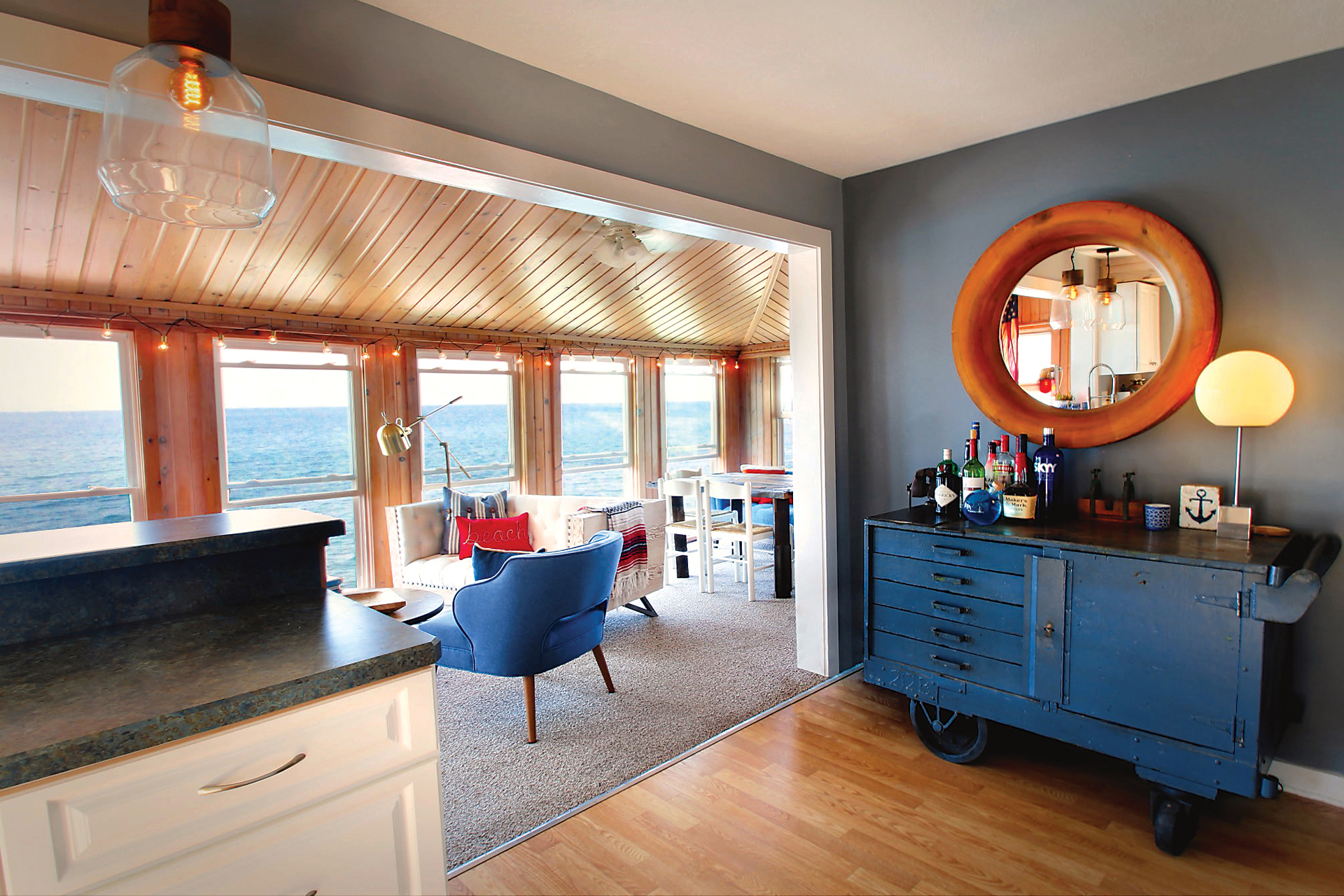
The first-floor whitewashed-pine-beadboard living-dining area is furnished in the same balance of style and sustainability. White wooden chairs with woven-wicker seats returned to service from the couple’s primary-residence attic, along with a low blue sofa that functions as a banquette, surround a table built by a friend with oak from his grandparents’ barn. Nearby, a midcentury-modern sofa upholstered in a white linen-look fabric shares space with a 1920s chrome-and-cowhide Le Corbusier chair and crushed-red-velvet seat resembling a cupped hand. A metal tool cart stationed against a kitchen wall serves as a bar, a nod to the region’s industrial history.
Caito and Rach, along with their Welsh terrier Baxter, make good use of the renovations by weekending at Malibula from late spring through fall. Caito talks of swimming in the lake, collecting rocks on the beach for a front-yard rock garden, changing the deck and cabana-level lighting to reflect the tone of movies viewed in the rec room — purple for “Wicked,” pink for “Barbie,” etc.
“We don’t even like to go out to dinner,” Caito says. “We’d just rather stay here.”
How to Add Modern Flair to Your Home Without Going Overboard
Modernizing your home can be as easy as a new coat of paint.
“Fresh paint is the number one thing to change your space,” says Clare Opfer of S&H Blinds and Floors in Sandusky, Ohio. “And people aren’t afraid of color anymore.”
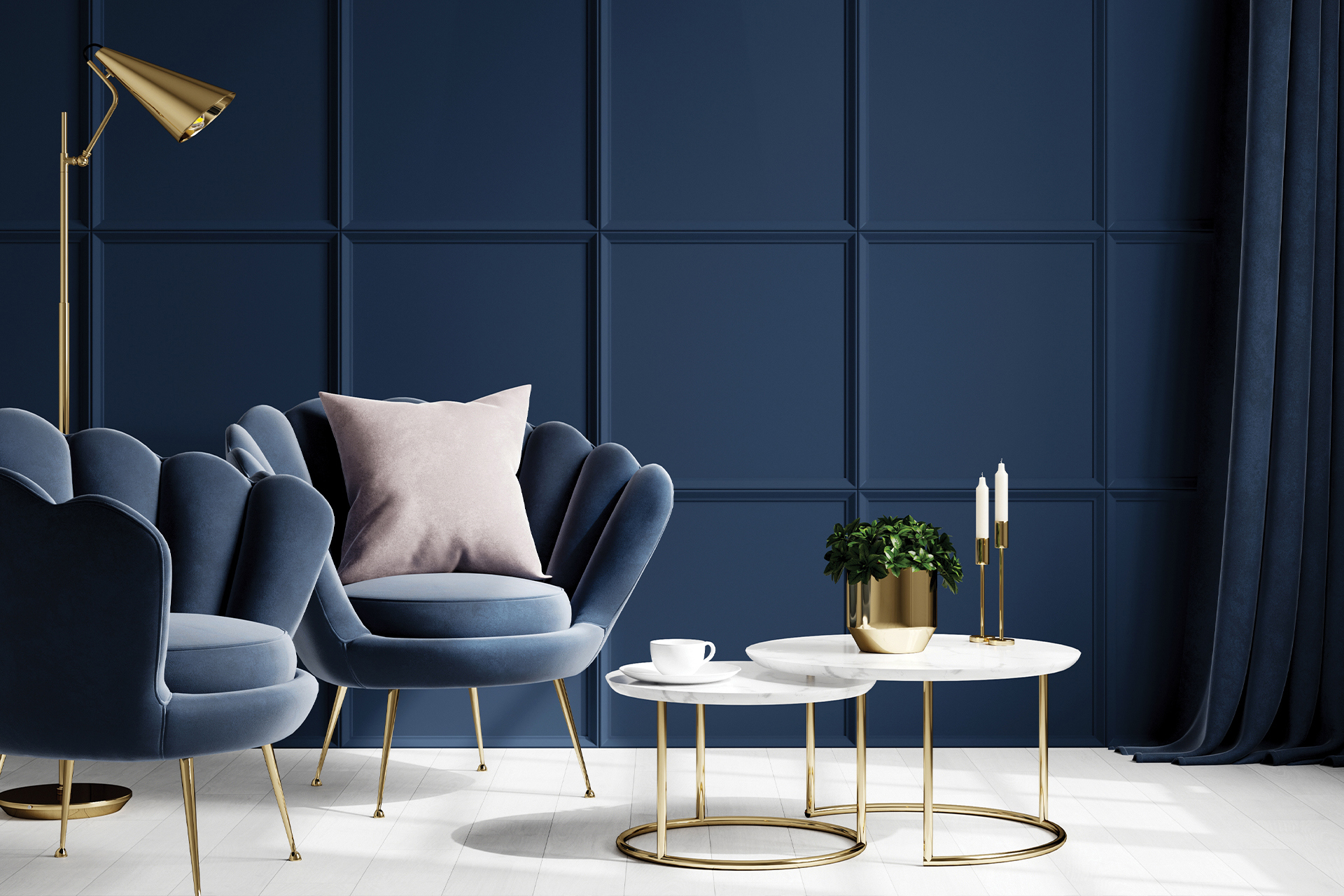
More and more people are looking at accent walls, using black or dark blue or green as a contrast to the typical neutral color interior walls. Opfer also recommends beadboard or wainscoting as additions to walls to freshen things up. “Then it’s not just a wall,” she says. “It becomes a piece of artwork.”
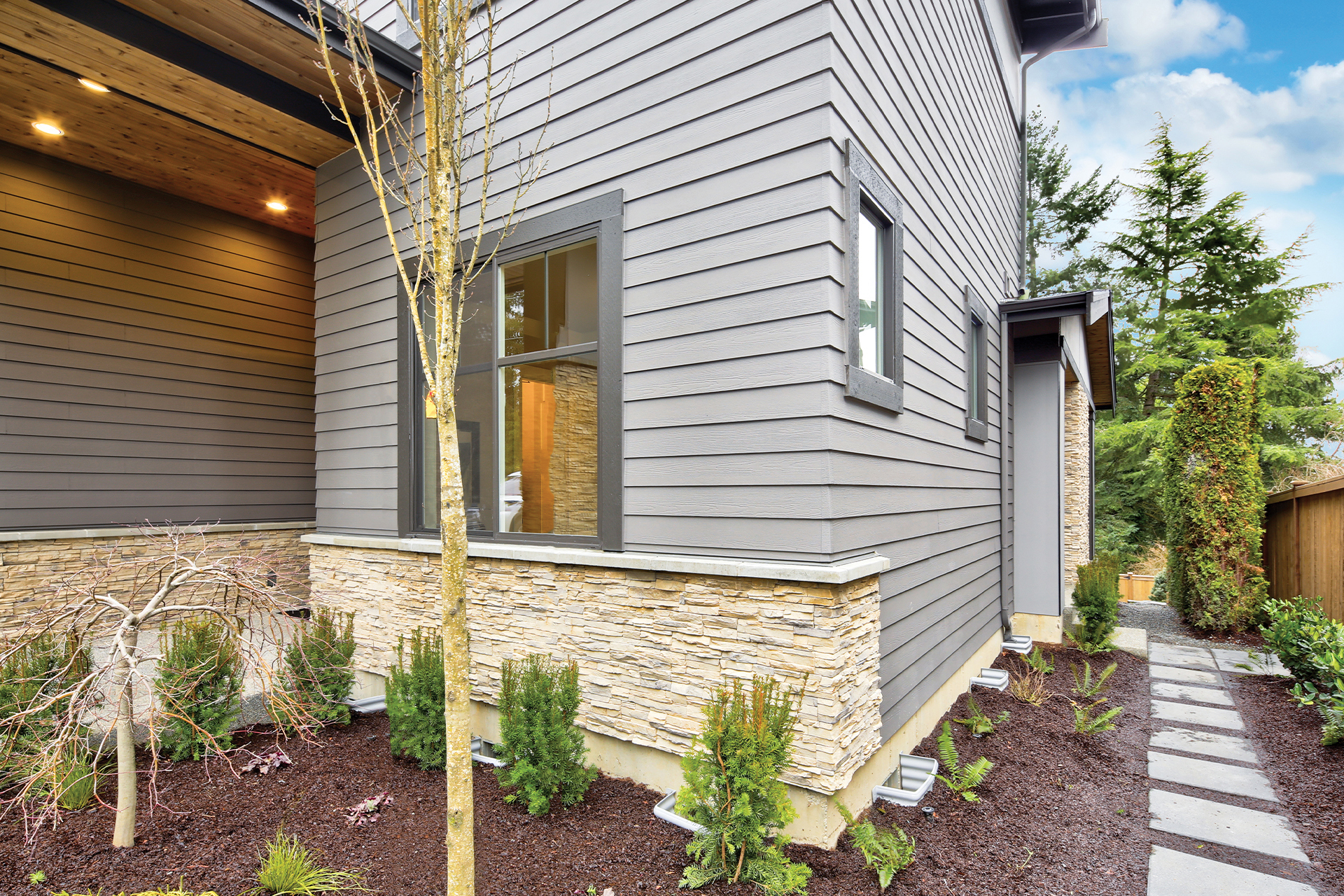
That extends to the exterior as well, says Trey Shaffer, sales director for Wayne Homes in Sandusky. “Mixed materials are in,” he says. “Stone or brick as a base material with board and batten siding accents.”
Ted Otero of Otero Living in Chagrin Falls, Ohio, says he’s seeing a lot of homeowners who’ve been in a house for several years who are looking for a refresh as a cost-effective alternative to buying or building a new home. “Build costs and land costs are so expensive now,” he adds.
To that end, he’s seeing a return of rooms. For the last generation, many homes have been built with an open floor plan, encompassing a kitchen, dining area and living room. But now, people are looking for defined usable rooms — or repurposing existing rooms in a redesign.
“We might be reusing a dining room that’s not being used,” he says. “A lot of homes from the 1990s and 2000s had dining rooms that are being converted into a second office. That’s especially popular these days.”
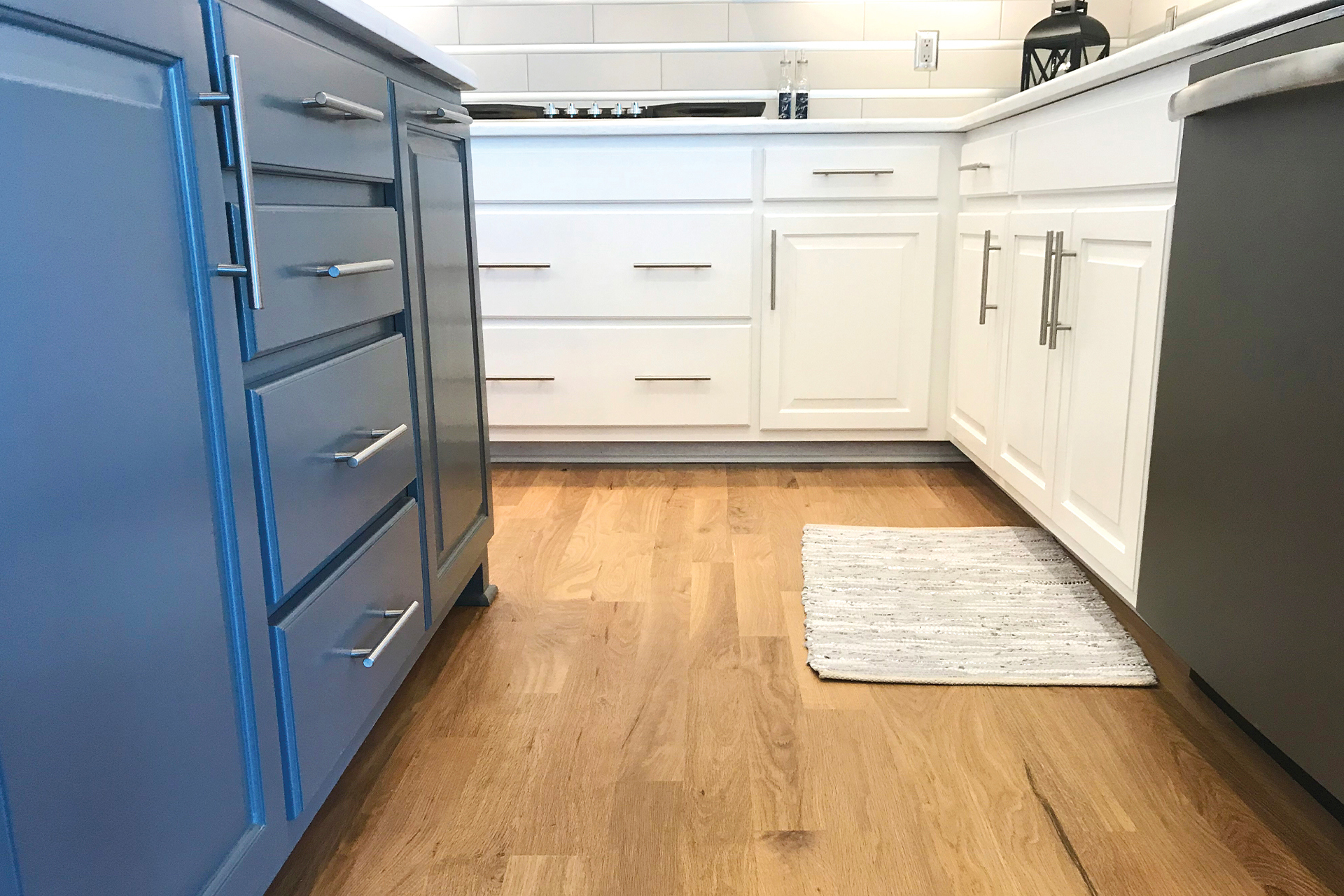
Shaffer is also seeing a lot of homeowners freshen up their interiors with kitchen remodels, including two-tone kitchens and a full-height backsplash from the countertop to the cabinet that could include the granite or quartz used for the countertop, or subway tile.
“Homeowners are taking the countertop up the wall so that it all flows together,” he says.
Story:
Lynne Thompson
2026 May/June


